When Your Office Is Also Your Bedroom, Dining Room, or Living Room
Not everyone has a dedicated home office.
Sometimes your workspace is:
A desk beside the bed.
One end of the dining table.
A narrow wall in the living room.
A tiny corner beside a bookshelf.
When space is limited, the solution isn't necessarily buying another cabinet.
Sometimes the better approach is making the space you already have work harder.
1. Protect the Desk Surface
Your desk surface is valuable.
Try to keep only frequently used items there.
Examples:
Laptop
Notebook
Pen
Planner
Water
One small organizer
Everything else should earn its place.
A clear central work area can make even a small desk feel larger.
2. Think Vertically
When horizontal space is limited, look upward.
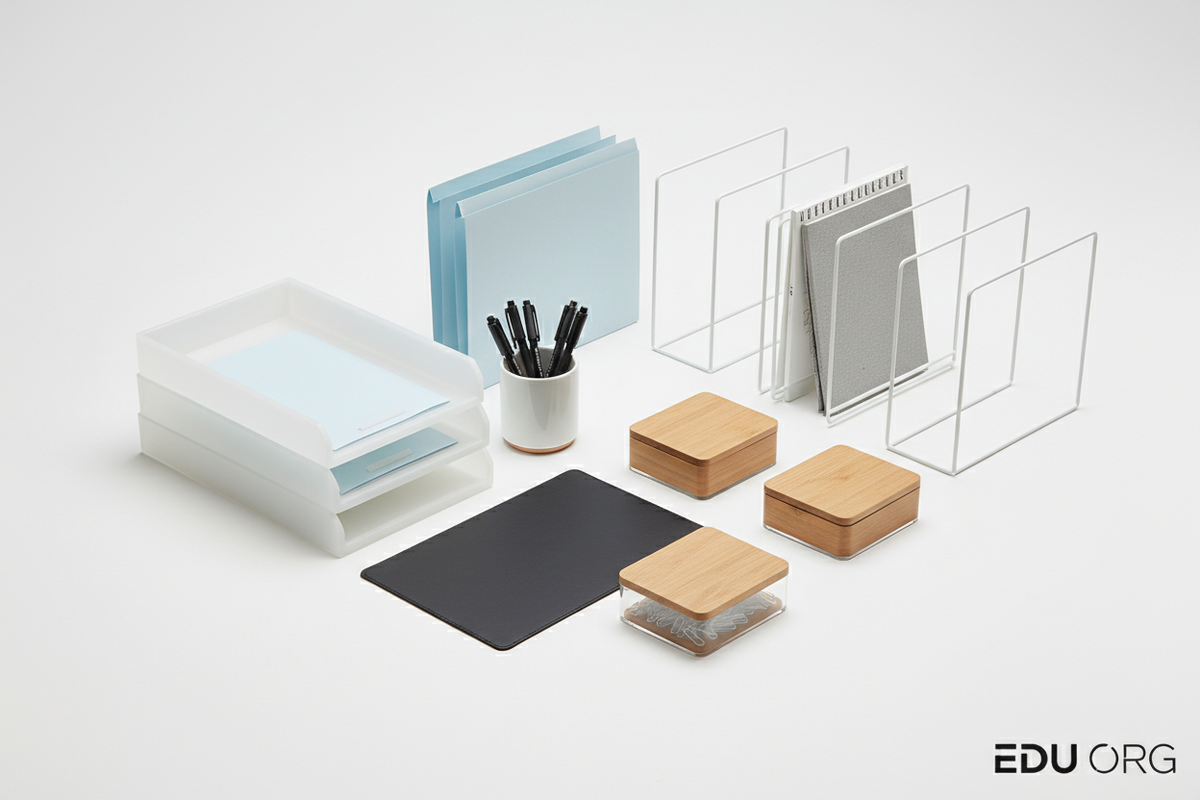
Vertical document holders can organize papers without consuming as much desk width.
Wall-mounted storage, when appropriate for your space, can also move supplies away from the working surface.
Think:
Up—not out.
3. Choose Multipurpose Accessories
In a small workspace, products that solve more than one problem can be especially useful.
For example, depending on the design:
A monitor riser may provide storage underneath.
A desk organizer may hold several supply categories.
A document holder may separate active projects.
Avoid filling the space with many single-purpose objects.
4. Create an “Active Work” Zone
Keep only current project materials nearby.
Everything else can be archived or stored separately.
If you're working on one report today, you probably don't need materials from five unrelated projects covering the desk.
5. Control the Cables
Cable clutter can visually shrink a small workspace.
Group charging cables.
Route them consistently.
Remove cables that aren't currently needed.
If possible, designate one charging location rather than plugging devices into several random places.
6. Use a Portable Work Kit
If your desk must sometimes become a dining table or another shared surface, create a portable work kit.
Keep together:
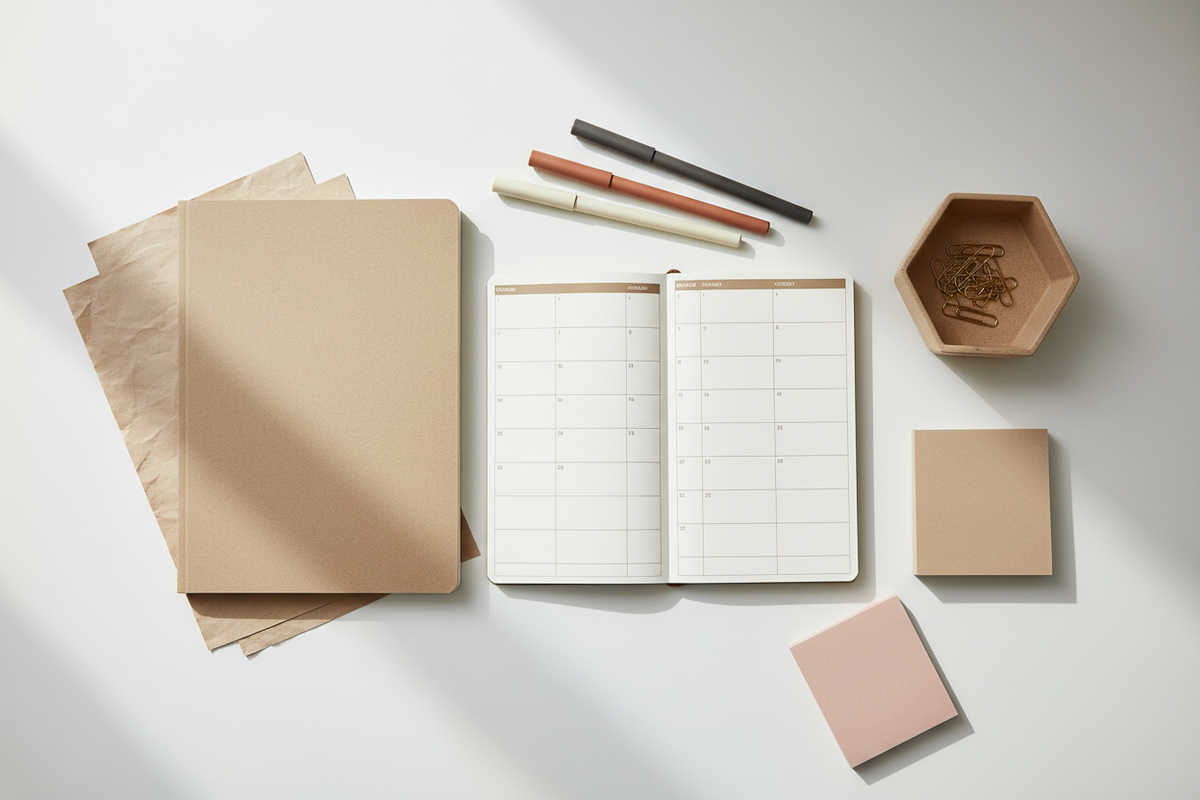
Notebook
Pens
Planner
Charging cable
Sticky notes
Essential documents
When work begins, bring out the kit.
When work ends, put it away.
Your office can appear and disappear in minutes.
7. Create a Visual Boundary
A desk mat can visually define the work zone.
A small lamp can create another cue.
The purpose is not decoration alone.
It's helping one corner of a multifunctional room feel like a distinct workspace.
8. End the Day by Returning the Room
This matters especially in small homes.
When work ends:
Close the laptop.
Store loose documents.
Return supplies.
Remove dishes.
Reset the surface.
Allow the room to become your home again.
SMALL-SPACE WORKSPACE CHECKLIST
☐ Clear central desk area
☐ Store vertically
☐ Keep only daily supplies nearby
☐ Organize cables
☐ Separate active projects
☐ Create portable work kit
☐ Reset after work
EDUDESK STUDIO™ ESSENTIALS
Laptop Stands
Monitor Risers
Desk Mats
Document Holders
Desk Organizers
Cable Accessories
Notebooks
Writing Essentials
EduDesk Studio™ Insight
A useful workspace isn't measured in square feet.
A small space can work extremely well when every item has a purpose and every frequently used tool has a predictable home.
Final Thought
Don't ask:
“How can I fit more into this space?”
Ask:
“What does this space actually need?”
The answer is usually smaller than you think.
Small space. Clear purpose. Better everyday work.
Explore Workspace & Organization Essentials at EduDesk Studio™ →