Introduction
Paper has a strange habit.
One envelope sits on the counter.
Then a school notice arrives.
Then a receipt.
Then a document you're afraid to throw away.
Before long, you have a pile—and nobody remembers exactly what's inside it.
The answer isn't necessarily a bigger filing cabinet.
It's a simpler decision-making system.
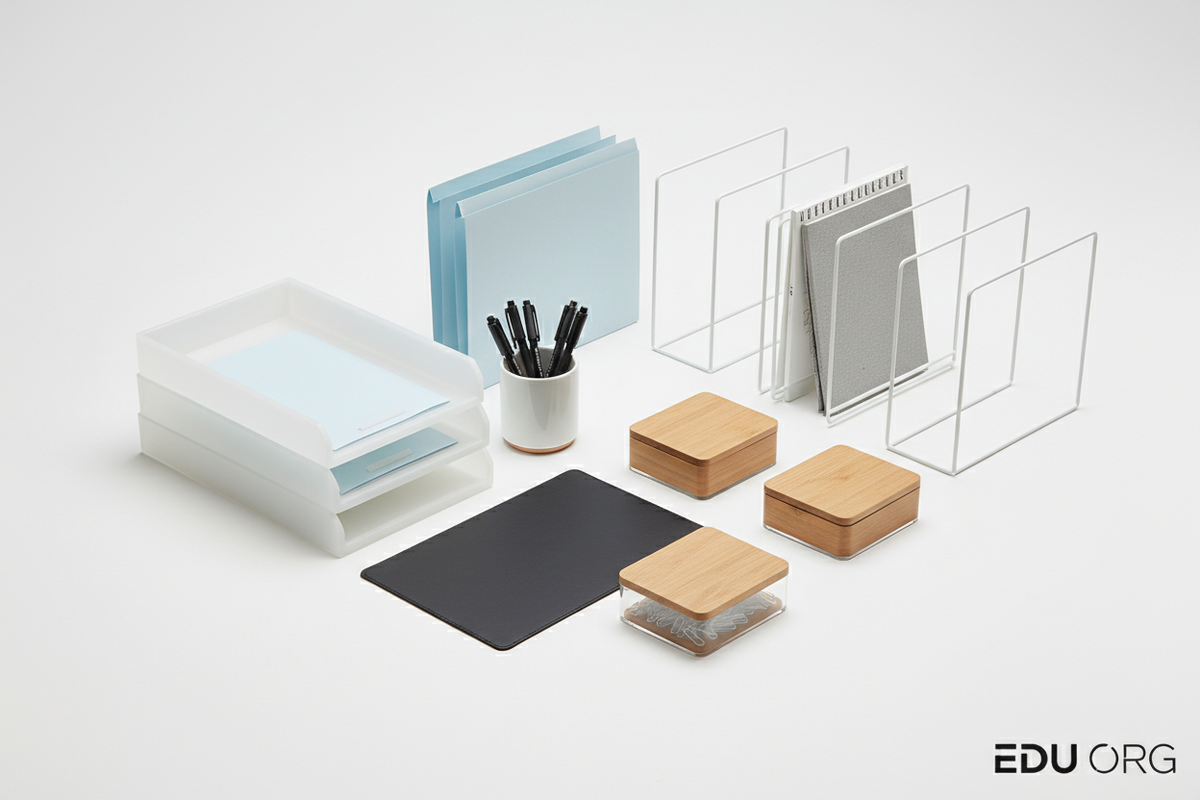
Create an Incoming Paper Zone
Choose one location for new paperwork.
Not the kitchen table.
Not beside the sofa.
Not three different drawers.
Use one document tray or holder labeled:
INBOX
When paperwork enters the home, it goes there first.
Use Four Basic Decisions
When reviewing the inbox, every paper should generally move toward one of four destinations:
ACTION
Something requires a response.
FILE
Something needs to be kept.
SCHEDULE
The paper contains an important date or deadline.
DISCARD
You no longer need it.
This prevents papers from returning to the mysterious “I'll decide later” pile.
Keep Filing Categories Broad
An overly complicated filing system often becomes difficult to maintain.
Start with broad categories that match your household, such as:
- Home
- Financial
- School
- Work
- Purchases
- Important Records
Add subcategories only when you genuinely need them.
Separate Active Documents from Archives
Documents connected to current projects should remain easy to reach.
Long-term records do not need to occupy valuable desk space.
Keeping the two separate makes your everyday filing system much easier to use.
Create a Weekly Paper Appointment
Pick one consistent time each week.
Spend 10–15 minutes processing the inbox.
Respond.
Schedule.
File.
Discard.
When paper is handled regularly, it rarely has time to become overwhelming.
Don't Forget Digital Copies
For documents you need digitally, scan or save them using clear file names and appropriate secure storage.
Avoid keeping unnecessary sensitive documents simply because you're unsure what to do with them.
EduDesk™ Insight
A good filing system isn't the one with the most folders.
It's the one you can maintain on an ordinary busy week.
EduDesk™ file folders, document holders, labels, desk organizers, and office essentials help create a clear home for the paperwork that matters.
Conclusion
You don't have to organize every piece of paper you've ever owned.
Start with what arrives today.
Give it a destination.
Repeat the process next week.
Less paper confusion. More everyday clarity with EduDesk™.